An Automated Route From Bacterial Genome to Peptide, Without Synthetic DNA
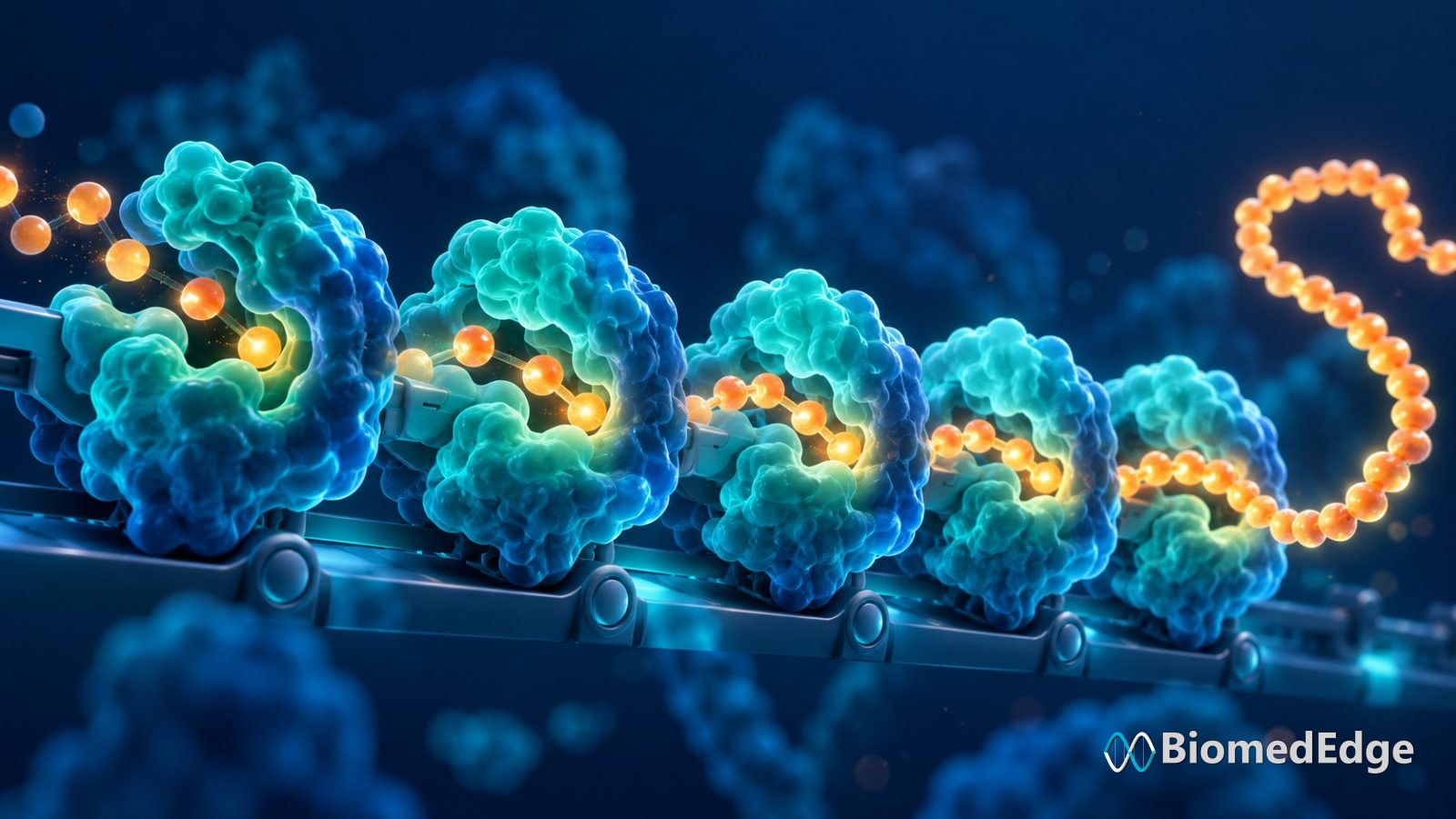
A platform called OSAR assembled 31 of 34 large bacterial gene clusters and produced 29 peptides, turning a months-long bespoke process into a batch workflow.
A group at the Shenzhen Institute of Synthetic Biology, working with collaborators at Jinan University and the University of California, Berkeley, has published an automated method for getting large bacterial gene clusters to produce their peptides in a laboratory host. The paper appeared in Nature Communications on October 11, 2026.
The platform, called OSAR, for One-Step Assembly and Refactoring, was applied to 34 bacterial gene clusters ranging from 7 to 78 kilobases. It assembled 31 of them, and expression in the bacterium Bacillus subtilis produced 29 peptides from 10 clusters. Notably, it does this without ordering custom-synthesized DNA, which is where much of the cost and delay in this work usually sits.
The sequencing surplus
Bacterial genome sequencing has produced an enormous catalogue of biosynthetic gene clusters: stretches of DNA encoding the enzymes that build a particular natural product. As the authors note, most of these clusters have never been characterized experimentally. The chemistry they encode is known only as sequence.
That matters because natural products from microbes remain one of the more productive sources of drugs, and this class in particular. Non-ribosomal peptides are built by assembly-line enzymes called non-ribosomal peptide synthetases, which string together amino acids without using the ribosome. Because they are freed from the ribosome's twenty-letter alphabet, they can incorporate unusual building blocks and adopt structures ordinary proteins cannot. The glycopeptide vancomycin, the lipopeptide daptomycin and the fungal immunosuppressant cyclosporine all come from this machinery.

Why anyone is still mining microbes
Most classes of antibiotic in clinical use trace back to compounds made by soil bacteria and fungi, found by growing organisms and testing what they secreted. That approach eventually ran into diminishing returns: screening campaigns kept rediscovering compounds that were already known, and pharmaceutical companies largely withdrew from the field even as resistant infections became more common.
Cheap genome sequencing reopened the question from the other end. Rather than culturing an organism and hoping it secretes something new, researchers can read its genome, identify clusters that look like they should make something, and go after the compound directly. This is genome mining, and it has shifted the bottleneck. The limiting factor is no longer finding candidate chemistry. It is persuading the DNA to yield the molecule it encodes.
Why these clusters stay silent
Two problems stand between a sequenced cluster and a compound in a flask.
The first is physical. NRPS clusters are large, often tens of kilobases, and internally repetitive, because the modules that add each amino acid resemble one another. Repetitive DNA of that size resists conventional cloning. Ordering it synthetically is possible but expensive, and the authors describe existing refactoring approaches as labour-intensive, dependent on de novo DNA synthesis and difficult to scale.
The second is regulatory. A cluster sitting in its native organism is typically silent under laboratory conditions, switched off by control circuits that respond to signals the lab does not supply. Independent reviews of the field describe the obstacles as transcriptional incompatibility, problems with protein folding and activation of the enzymes, and metabolic mismatch between the cluster and the host. Using the cluster's own promoters in a distantly related host rarely works.
"Refactoring" is the response: strip out the native regulatory elements and replace them with promoters the chosen host reliably reads, so the genes are expressed on the researcher's terms rather than the organism's. Doing that across a 60-kilobase cluster, repeatedly, is the bottleneck OSAR targets.
How the platform works
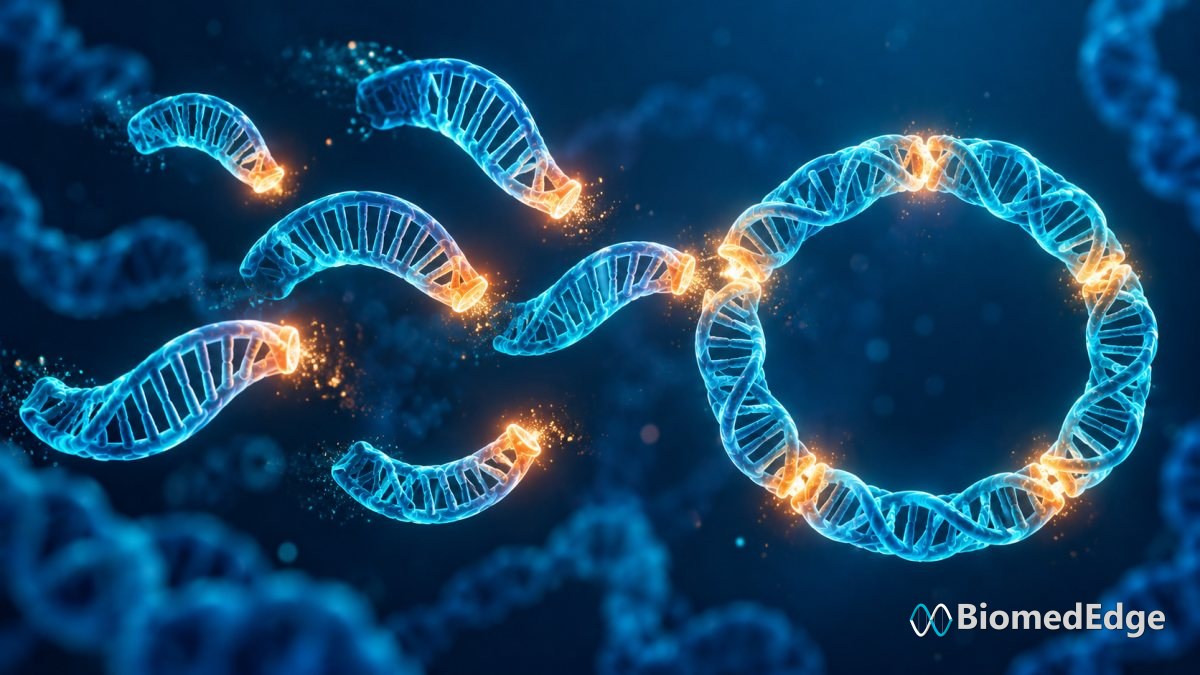
OSAR pairs algorithmic primer design with yeast homologous-recombination cloning, run on automated liquid-handling equipment at the Shenzhen Synthetic Biology Infrastructure. Software designs primers that amplify the cluster's segments directly from genomic DNA while adding the overlapping ends and new regulatory parts needed for reassembly. Yeast then performs the assembly: given fragments with matching overlaps, Saccharomyces cerevisiae stitches them into a single construct by homologous recombination, a property long exploited to build large DNA assemblies in one step.
The result is that assembly and refactoring happen together, from the organism's own DNA, with no synthesis order. The assembled construct is then moved into B. subtilis for expression.
The automation matters as much as the chemistry. A workflow that one skilled postdoctoral researcher can execute on a single cluster over several months is a research project; the same workflow running on liquid-handling robots across dozens of clusters in parallel is a screening campaign. That shift from bespoke to batch is what the paper is really demonstrating, and it is why the authors report results across 34 clusters rather than one showcase example.
What it produced
- Assembly: 31 of 34 clusters were assembled successfully, across a size range of 7 to 78 kb.
- Expression: 10 clusters yielded detectable products in B. subtilis, giving 29 peptides in total.
- Unexpected chemistry: several products appeared to arise from what the authors call cryptic biosynthetic behaviours, including potential module skipping, where the assembly line omits a step, and premature release, where the chain is let go early.
That last finding is scientifically interesting in its own right. The textbook model of these enzymes is strictly colinear, one module adding one residue in order. Products consistent with skipped modules and early release suggest the machinery is looser than the model, and that a single cluster may generate a family of related compounds rather than one.
For drug discovery that cuts both ways. Unexpected variants complicate the job of working out which gene sequence produces which molecule, and they make yields harder to optimize. But a cluster that naturally produces several related structures also hands chemists a set of analogues to compare, which is otherwise slow work to generate by synthesis.
Limitations
- Expression, not assembly, is now the limiting step. Only 10 of the 31 assembled clusters produced detectable peptides. The method solves the cloning problem more convincingly than the expression problem.
- Restricted genomic range. The work covers low- to medium-GC bacteria. That excludes the actinomycetes, including Streptomyces, which are high-GC and historically the richest source of antibiotics.
- One host. Results come from B. subtilis; how the workflow transfers to other expression hosts is untested here.
- Peptides, not drugs. The paper reports compounds produced and characterized. It does not report that any of them are antibacterial, let alone developable. Finding a molecule is the beginning of drug discovery, not the end.
- Attribution requires care. Work elsewhere has shown that introducing foreign clusters can perturb a host's metabolism enough to switch on the host's own silent genes, so products must be traced carefully to the transferred DNA.
- Early-release version, published ahead of the final version of record. The senior authors also disclose financial interests in several biotechnology companies.
What to watch
- Whether the workflow extends to high-GC actinomycete clusters, which would substantially widen its reach.
- Bioactivity screening of the peptides produced, and whether any show antimicrobial or other useful activity.
- Improvements in expression rates, through host engineering or better choice of regulatory parts.
- Whether module skipping and premature release can be controlled deliberately, as a way of generating analogue libraries from one cluster.
- Adoption by other groups, which is the real test of whether an automated platform scales beyond the facility that built it.
This article is for information only and is not medical advice. Treatment decisions should be made with a qualified clinician.
Sources: Nature Communications; PMC review of NRPS and PKS heterologous expression; PMC study on host cryptic gene activation
What did you think of this article?
Found this helpful? Share it!
Comments (0)
Leave a Comment
Be the first to comment!